


KMITL Expo 2026 LogoKMITL 66th Anniversary Logo

Miss Queue

Miss Queue

Abstract

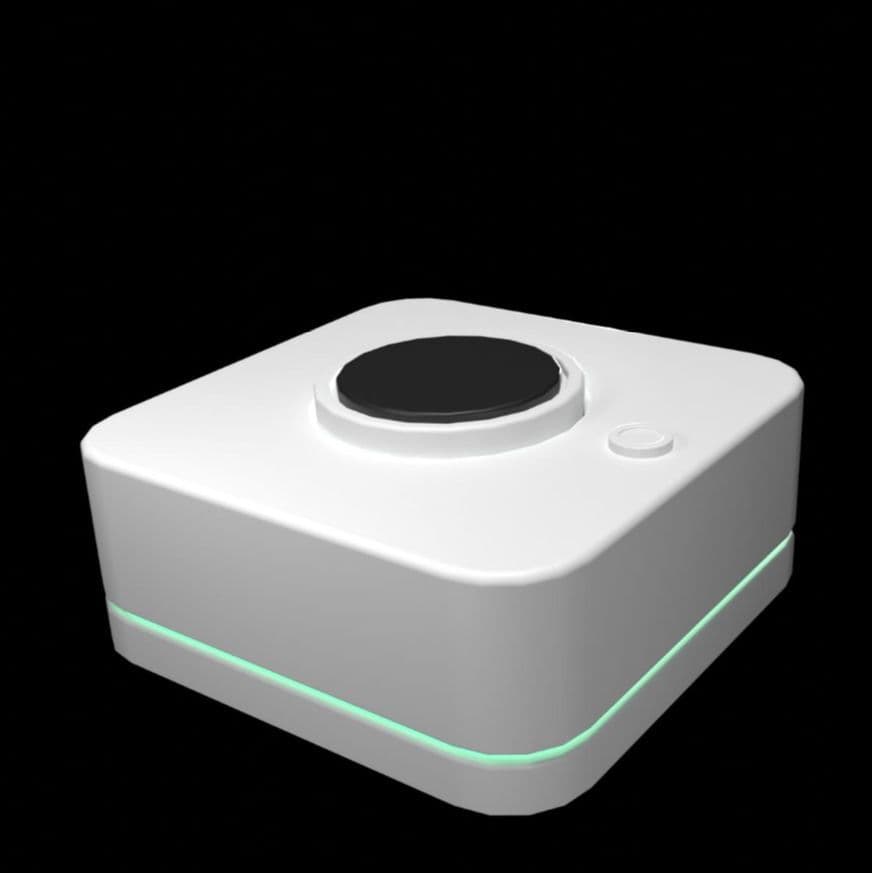
This innovation reduces costs and enhances queue management efficiency in restaurants, ensuring an organized system, minimizing wait times, and improving customer handling.

Objective

หลายร้านอาหารเผชิญปัญหาในการจัดการลำดับคิวลูกค้า โดยเฉพาะเมื่อจำนวนเครื่องเพจเจอร์หรือระบบเข้าคิวไม่เพียงพอรองรับลูกค้าทั้งหมด อีกทั้งอุปกรณ์เหล่านี้ยังมีต้นทุนสูงและต้องใช้ทรัพยากรในการผลิตและบำรุงรักษาอย่างต่อเนื่อง ด้วยเหตุนี้ ผู้พัฒนาจึงเล็งเห็นถึงโอกาสในการปรับปรุงระบบดังกล่าว และได้นำเสนอนวัตกรรมที่ช่วยให้ร้านอาหารลดต้นทุนที่ไม่จำเป็น พร้อมเพิ่มประสิทธิภาพในการจัดการคิวได้อย่างคุ้มค่าและมีประสิทธิผลยิ่งขึ้น

Other Innovations

Decoding the Impact of RGL3 Genetic Variants on Protein Structure and Binding Site: A Bioinformatics Approach to Uncover Potential Hypertension Associations

คณะแพทยศาสตร์

Decoding the Impact of RGL3 Genetic Variants on Protein Structure and Binding Site: A Bioinformatics Approach to Uncover Potential Hypertension Associations

Background: The RGL3 gene plays a role in key signal transduction pathways and has been implicated in hypertension risk through the identification of a copy number variant deletion in exon 6. Genome-wide association studies have highlighted RGL3 as associated with hypertension, providing insights into the genetic underpinnings of the condition and its protective effects on cardiovascular health. Despite these findings, there is a lack of data that confirms the precise role of RGL3 in hypertension. Additionally, the functional impact of certain variants, particularly those classified as variants of uncertain significance, remains poorly understood. Objectives: This study aims to analyze alterations in the RGL3 protein structure caused by mutations and validate the location of the ligand binding sites. Methods: Clinical variants of the RGL3 gene were obtained from NCBI ClinVar. Variants of uncertain significance and likely benign were analyzed. Multiple sequence alignment was conducted using BioEdit v7.7.1. AlphaFold 2 predicted the wild-type and mutant 3D structures, followed by quality assessment via PROCHECK. Functional domain analysis of RasGEF, RASGEF_NTER, and RA domains was performed, and BIOVIA Discovery Studio Visualizer 2024 was used to evaluate structural and physicochemical changes. Results: The analysis of 81 RGL3 variants identified 5 likely benign and 76 variants of uncertain significance (VUS), all of which were missense mutations. Structural modeling using AlphaFold 2 revealed three key domains: RasGEF_NTER, RasGEF, and RA, where mutations induced conformational changes. Ramachandran plot validation confirmed 79.7% of residues in favored regions, indicating an overall reliable structure. Moreover, mutations within RasGEF and RA domains altered polarity, charge, and stability, suggesting potential functional disruptions. These findings provide insight into the structural consequences of RGL3 mutations, contributing to further functional assessments. Discussion & Conclusion: The identified RGL3 mutations induced physicochemical alterations in key domains, affecting charge, polarity, hydrophobicity, and flexibility. These changes likely disrupt interactions with Ras-like GTPases, impairing GDP-GTP exchange and cellular signaling. Structural analysis highlighted mutations in RasGEF and RA domains that may interfere with activation states, potentially affecting protein function and stability. These findings suggest that mutations in RGL3 could have functional consequences, emphasizing the need for further molecular and functional studies to explore their pathogenic potential.

Read more
The use of Houttuynia cordata Thunb and Piper retrofractum Vahl extracts to inhibit opportunistic infections in patient with atopic dermatitis

คณะวิทยาศาสตร์

The use of Houttuynia cordata Thunb and Piper retrofractum Vahl extracts to inhibit opportunistic infections in patient with atopic dermatitis

Atopic dermatitis patients are the second largest number among skin disease patients. There is no cure for atopic dermatitis, and it can only be treated to relieve symptoms, causing chronic disease. There is a chance that opportunistic infections will enter and cause more disease from the patient's wound, causing the patient to have complications from other infections. This study is interested in studying the reduction of the chance of opportunistic infections in patients with atopic dermatitis using natural extracts. The interest is in Plu Kaow and long pepper because there is data supporting the inhibition of microorganisms. The leaves of both plants are crudely extracted, soaked in 95% ethanol for 7 days, filtered with a Buchner filter, and the extracts are tested for phytochemicals to analyze phenolic components, flavonoids, tannins, anthocyanin, DPPH, and tested for antimicrobial properties. The experiments consisted of 5 types of gram-positive and gram-negative bacteria: E. coli, Bacillus subtilis, Pseudomonas aeruginosa, Staphylococcus aureus, and Staphylococcus epidermidis. The researcher expects that this can be further developed and used to treat patients with atopic dermatitis.

Read more
Smart Cat House

คณะวิทยาศาสตร์

Smart Cat House

This project presents the development of a "Smart Cat House" using Internet of Things (IoT) and image processing technology to facilitate and enhance the safety of cat care for owners. The infrastructure of the smart cat house consists of an ESP8266 board connected to an ESP32 CAM camera for cat monitoring, and an Arduino board that controls various sensors such as a motion sensor in the litter box, a DHT22 temperature and humidity sensor, an ultrasonic water and food level sensor, including a water supply system for cats, an automatic feeding system, and a ventilation system controlled by a DC FAN that adjusts its operation according to the measured temperature to maintain a suitable environment. There is also an IR sensor to detect the cat's entry into the litter box and an automatic sand changing system with a SERVO MOTOR. All systems are connected and controlled through the Blynk application, which can be used on mobile phones, allowing owners to monitor and care for their pets remotely. Cat detection and identification uses image processing technology from the ESP32 CAM camera in conjunction with YOLO (You Only Look Once), a high-performance object detection algorithm, to detect and distinguish between cats and people. Data from various sensors are sent to the Arduino board to control the operation of various devices in the smart cat house, such as turning lights on and off, automatically changing sand, adjusting temperature and humidity, feeding food and water at scheduled times, or ventilation. The use of a connection system via ESP8266 and the Blynk application makes it easy and convenient to control various devices. Owners can monitor and control the operation of the entire system from anywhere with internet access.

Read more