



KMITL Expo 2026 LogoKMITL 66th Anniversary Logo

Comparison of greenhouse system optimum to potted petunia production

Comparison of greenhouse system optimum to potted petunia production

Abstract

-

Objective

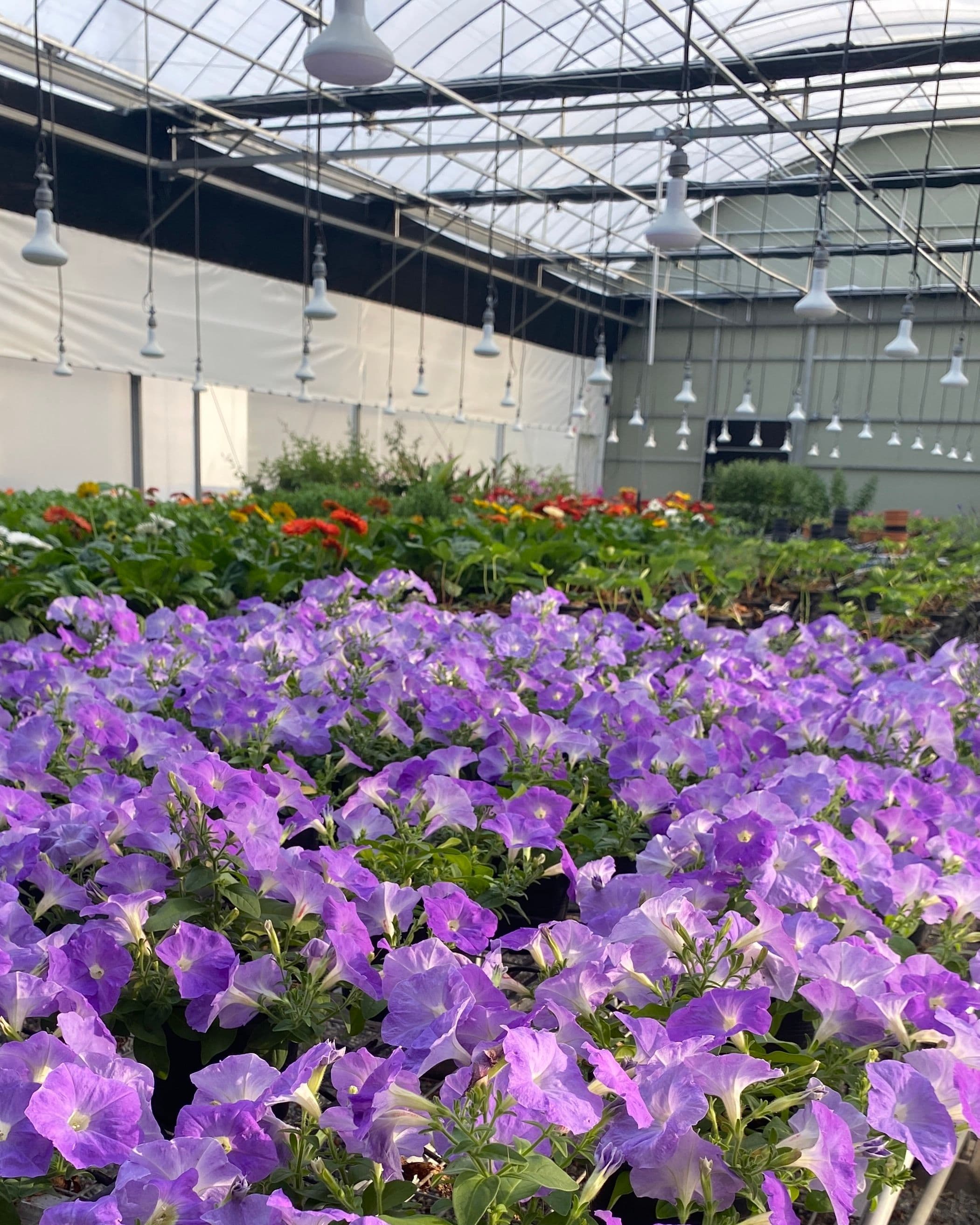
พิทูเนีย (petunia) มีชื่อวิทยาศาสตร์ว่า Petunia hybrida อยู่ในวงศ์ Solanaceae มีแหล่งกำเนิดในแถบทวีปอเมริกาใต้ (นันทิยา, 2535) เป็นไม้ดอกไม้ประดับที่นิยมปลูกกันอย่างแพร่หลายทั้งในและต่างประเทศ มีมูลค่าทางเศรษฐกิจในปี ค.ศ. 2019–2020 กว่า 60 ล้านดอลลาร์สหรัฐ (United States Department of Agriculture, 2020; 2021) พิทูเนียมีสายพันธุ์ที่หลากหลายทำให้มีคุณภาพดอก ทั้งสีและขนาดของดอกที่แตกต่างกัน (สุคนธ์ทิพย์ และคณะ, 2554) ต้นมีลักษณะเป็นพุ่มเตี้ย ค่อนไปทางไม้เลื้อย ใบคล้ายใบยาสูบแต่ขนาดเล็กกว่า มีขนปกคลุมผิวใบ ดอกมีสีสวยงามมักจะนิยมใช้เป็นไม้กระถางและไม้ประดับแปลง (สมเพียร, 2526) นอกจากนี้ดอกของพิทูเนียบางสายพันธุ์สามารถรับประทาน (Edible Flowers) และนำมาทำสีผสมอาหารได้ (บ้านและสวน, 2564; ออนไลน์) อีกทั้งพบสารประกอบฟีนอลิกมีฤทธิ์ต้านอนุมูลอิสระ (Ivanka et al., 2020) แต่ในการปลูกและดูแลรักษาพิทูเนียมักพบปัญหาที่มาจากสภาพแวดล้อมที่ไม่เหมาะสมและการจัดการที่ไม่ถูกต้อง เช่น การระบายน้ำไม่ดีทำให้วัสดุปลูกมีความชื้นสูง หรือเกิดจากเชื้อรา Pythium spp. และ Phytophthora spp. ทำให้รากเน่า (Nelson, 2012) หรือโรคใบไหม้เกิดจากเชื้อรา Botrytis cinerea ทำให้พิทูเนียเกิดจุดสีน้ำตาลและมีเชื้อราสีเทาในใบและดอก มักพบในสภาพอากาศชื้น (Agrios, 2005) นอกจากนี้หากพืชได้รับแสงและอุณหภูมิไม่เหมาะสมจะทำให้การบานของดอกไม่สมบูรณ์ เพราะพิทูเนียต้องการแสงแดดอย่างน้อย 4-6 ชั่วโมงต่อวัน (Dole and Wilkins, 2005) และอุณหภูมิที่ 26 องศาเซลเซียส (Warner, 2010) การป้องกันและการจัดการที่ดีจะช่วยลดปัญหาเหล่านี้และทำให้พิทูเนียเจริญเติบโตได้ดีขึ้น การปลูกไม้ดอกกระถางมี 3 รูปแบบ ขึ้นอยู่กับลักษณะการดูแลและสภาพแวดล้อมที่ต้องการ ดังนี้ 1. การปลูกในระบบดิน (soil-based planting) ใช้ดินผสมกับปุ๋ยและวัสดุปรับปรุงดิน เช่น ทราย หรือขุยมะพร้าว เพื่อให้พืชเติบโตในดินโดยตรง เหมาะสำหรับไม้ดอกกระถางที่ไม่ต้องการการดูแลมากและประหยัดต้นทุนในการผลิต (บ้านและสวน, 2567; ออนไลน์) 2. การปลูกในระบบที่ไม่ใช้ดิน (soilless culture) โดยให้สารละลายธาตุอาหารเป็นแหล่งอาหารหลักสำหรับพืชแทนการใช้ดิน เหมาะสำหรับการปลูกไม้ดอกที่ต้องการการควบคุมปริมาณธาตุอาหารอย่างแม่นยำ ลดปัญหาเรื่องโรคในดิน และการดูแลพืชที่มีประสิทธิภาพสูง (ธรรมศักดิ์, 2544) 3. การปลูกในระบบโรงเรือน (greenhouse cultivation) เพื่อควบคุมสภาพแวดล้อมให้เหมาะสมกับการเจริญเติบโตของไม้ดอก เช่น อุณหภูมิ ความชื้น และแสง เป็นต้น เหมาะสำหรับการผลิตในเชิงพาณิชย์หรือพื้นที่ที่มีสภาพอากาศไม่เหมาะสม ทำให้ไม้ดอกมีคุณภาพและเจริญเติบโตได้ดีกว่ารูปแบบอื่น (เนตาฟิม, 2567; ออนไลน์) อย่างไรก็ตามรูปแบบการปลูกแต่ละระบบจะมีข้อดี-ข้อเสียต่างกัน ขึ้นอยู่กับสภาพพื้นที่และการจัดการของผู้ปลูก การปลูกไม้ดอกกระถางในโรงเรือนสามารถใช้ได้หลายรูปแบบขึ้นอยู่กับสภาพแวดล้อม ความต้องการในการควบคุมสภาพแวดล้อมและประเภทของไม้ดอกที่ปลูก สามารถแบ่งเป็น 4 แบบหลัก ๆ ได้แก่ 1. โรงเรือนมุงพลาสติก (plastic greenhouse) ใช้โครงสร้างเหล็กหรืออลูมิเนียม และมุงด้วยพลาสติกที่มีคุณสมบัติกรองแสง UV ราคาค่อนข้างต่ำและติดตั้งง่าย ควบคุมอุณหภูมิและความชื้นได้ดี แต่พลาสติกมีอายุการใช้งานสั้นและต้องเปลี่ยนใหม่ทุก ๆ 3-5 ปี มีปัญหาเรื่องการสะสมความร้อนในช่วงกลางวัน เหมาะสมสำหรับการปลูกไม้ดอกที่ต้องการการควบคุมสภาพแวดล้อม เช่น เบญจมาศ หรือไม้ดอกกระถางที่ไม่ต้องการแสงแดดแรง (หัตถ์ชัย, 2546; ธาวิดา, 2560; ออนไลน์) 2. โรงเรือนกระจก (glasshouse) ใช้แผ่นกระจกหรือวัสดุโปร่งแสงในการมุงหลังคาและผนัง เพื่อให้พืชได้รับแสงธรรมชาติมากที่สุด สามารถควบคุมแสง อุณหภูมิ และความชื้นได้ดี มีความคงทนสูง อายุการใช้งานยาวนาน แต่ต้นทุนสูง การบำรุงรักษาและทำความสะอาดต้องใช้เวลาและค่าใช้จ่าย เหมาะสมสำหรับการผลิตไม้ดอกที่ต้องการแสงแดดจัดและมีความต้องการในการควบคุมสภาพแวดล้อมที่แม่นยำ เช่น กุหลาบหรือ เบญจมาศ (หัตถชัย, 2546; เนตาฟิม, 2567; ออนไลน์) 3. โรงเรือนมุงแผ่นโพลีคาร์บอเนต (polycarbonate greenhouse) ใช้แผ่นโพลีคาร์บอเนตที่มีคุณสมบัติในการกรองแสงและเก็บรักษาความร้อนภายในโรงเรือน ทนทานต่อสภาพอากาศและช่วยรักษาความร้อนในช่วงกลางคืน กรองแสงได้ดีและลดความเสี่ยงจากแสงแดดจัด แต่ต้นทุนสูงกว่าโรงเรือนพลาสติก ต้องการการบำรุงรักษาอย่างสม่ำเสมอ เหมาะสมสำหรับการปลูกไม้ดอกที่ต้องการการควบคุมอุณหภูมิอย่างแม่นยำ เช่น เบญจมาศกระถางที่ต้องการอุณหภูมิคงที่ (แอมเพิลไลท์, 2567; ออนไลน์) 4. โรงเรือนตาข่ายพรางแสง (shade net house) ใช้ตาข่ายพรางแสงที่มีความทนทานและมีความหนาต่างกัน เพื่อควบคุมปริมาณแสงที่พืชจะได้รับ ราคาถูกและติดตั้งง่าย สามารถเลือกความหนาของตาข่ายพรางแสงตามความต้องการของพืช แต่การควบคุมอุณหภูมิและความชื้นไม่สามารถทำได้เหมือนโรงเรือนประเภทอื่นๆ การควบคุมความชื้นและการป้องกันสภาพอากาศจากภายนอกไม่มีประสิทธิภาพ เหมาะสมสำหรับการปลูกไม้ดอกที่ไม่ต้องการแสงแดดจัด (เนตาฟิม, 2567; ออนไลน์) โรงเรือนระบบปิดและโรงเรือนระบบเปิดมีความแตกต่างกันในเรื่องการควบคุมสภาพแวดล้อมภายในโรงเรือนและการระบายอากาศ ดังนี้ 1. โรงเรือนระบบปิด (closed greenhouse) มีการควบคุมสภาพแวดล้อมภายในอย่างเต็มที่ เช่น การควบคุมอุณหภูมิ ความชื้น และระดับ CO2 โดยใช้ระบบระบายอากาศที่สามารถควบคุมได้ เช่น ระบบการเปิด-ปิดของหน้าต่าง ระบบเครื่องปรับอากาศ และการให้น้ำอัตโนมัติ การควบคุมอุณหภูมิ ความชื้น และธาตุอาหาร ในโรงเรือนได้อย่างแม่นยำ ลดปัญหาเกี่ยวกับการระบาดของโรคและศัตรูพืชจากภายนอก ใช้พื้นที่อย่างมีประสิทธิภาพ แต่ต้นทุนสูงในการติดตั้งและบำรุงรักษา ต้องการการจัดการและดูแลที่ซับซ้อน (ชาคริต, 2565; ออนไลน์) 2. โรงเรือนระบบเปิด (open greenhouse) มีการระบายอากาศจากธรรมชาติหรือใช้พัดลมเพื่อช่วยให้อากาศถ่ายเทและควบคุมอุณหภูมิบางส่วน แต่ไม่ได้ควบคุมสภาพแวดล้อมภายในได้มากเท่ากับระบบปิด ต้นทุนการติดตั้งต่ำ การบำรุงรักษาง่าย ไม่ต้องใช้เทคโนโลยีที่ซับซ้อน การควบคุมอุณหภูมิและความชื้นไม่สามารถทำได้แม่นยำ สภาพอากาศภายนอกมีผลกระทบโดยตรงกับสภาพแวดล้อมภายในโรงเรือน การเลือกใช้ระบบเปิดหรือปิดขึ้นอยู่กับประเภทของพืชที่ปลูกและความสามารถในการลงทุนในเทคโนโลยีการควบคุมสภาพแวดล้อม การปลูกพิทูเนียในโรงเรือนเป็นวิธีที่นิยมใช้กันมาก เนื่องจากสามารถควบคุมสภาพแวดล้อมให้เหมาะสมกับการเจริญเติบโตของพืชได้ แบ่งออกเป็นหลายวิธีตามลักษณะและเทคนิคที่ใช้ เช่น การปลูกแบบไฮโดรโพนิกส์ (hydroponic cultivation) ใช้วัสดุปลูกที่ไม่ใช่ดิน เช่น เพอร์ไลต์ กาบมะพร้าว หรือฟางข้าว โดยให้น้ำที่มีสารละลายธาตุอาหารอยู่ สามารถควบคุมปริมาณธาตุ อาหารได้ดี ลดปัญหาโรคที่เกิดจากดิน แต่ต้องการการดูแลและเทคโนโลยีสูงกว่า (Cardarelli et al., 2010) การปลูกในโรงเรือนระบายความร้อนด้วยการระเหย (evaporative cooling house) เป็นระบบที่ใช้การระเหยของน้ำเพื่อช่วยลดอุณหภูมิภายในโรงเรือน โดยมีหลักการทำงานที่ช่วยให้พืชเจริญเติบโตในสภาพแวดล้อมที่เหมาะสม สามารถลดอุณหภูมิได้อย่างมีประสิทธิภาพโดยไม่ต้องใช้พลังงานไฟฟ้ามาก เหมาะสำหรับพื้นที่ที่มีอากาศร้อนและแห้ง ซึ่งการระเหยสามารถทำให้พืชเจริญเติบโตได้ดี และช่วยลดความชื้นภายในโรงเรือน โดยการระเหยของน้ำจะช่วยทำให้บรรยากาศรอบตัวพืชมีความสะอาดและมีสุขภาพดี (Dole and Wilkins, 2005; Nelson, 2012) การผลิตพิทูเนียในช่วงฤดูฝนไม่เป็นที่นิยมมากนัก เนื่องจากมักพบปัญหาที่มาจากสภาพแวดล้อมที่ไม่เหมาะสม เช่น เวลาฝนตก ถ้าจัดการการระบายน้ำได้ไม่ดีจะส่งผลให้วัสดุปลูกมีความชื้นสูง ทำให้ลำต้น ใบและดอกเน่า (สมเพียร, 2526) รวมถึงปัญหาเรื่องแสงและอุณหภูมิที่ไม่เหมาะสม ส่งผลให้การบานของดอกไม่สมบูรณ์ อีกทั้งยังมีปัญหาความชื้นและเชื้อรา ดังนั้นการทดลองนี้จึงต้องการเปรียบเทียบรูปแบบโรงเรือนที่เหมาะสมสำหรับการผลิตพิทูเนียกระถาง เพื่อสามารถนำมาประกอบการตัดสินใจในการผลิตพิทูเนียเพื่อการค้าต่อไป

Other Innovations

A Human-engaging Robotic Interactive Assistant

คณะวิศวกรรมศาสตร์

A Human-engaging Robotic Interactive Assistant

The integration of intelligent robotic systems into human-centric environments, such as laboratories, hospitals, and educational institutions, has become increasingly important due to the growing demand for accessible and context-aware assistants. However, current solutions often lack scalability—for instance, relying on specialized personnel to repeatedly answer the same questions as administrators for specific departments—and adaptability to dynamic environments that require real-time situational responses. This study introduces a novel framework for an interactive robotic assistant (Beckerle et al. , 2017) designed to assist during laboratory tours and mitigate the challenges posed by limited human resources in providing comprehensive information to visitors. The proposed system operates through multiple modes, including standby mode and recognition mode, to ensure seamless interaction and adaptability in various contexts. In standby mode, the robot signals readiness with a smiling face animation while patrolling predefined paths or conserving energy when stationary. Advanced obstacle detection ensures safe navigation in dynamic environments. Recognition mode activates through gestures or wake words, using advanced computer vision and real-time speech recognition to identify users. Facial recognition further classifies individuals as known or unknown, providing personalized greetings or context-specific guidance to enhance user engagement. The proposed robot and its 3D design are shown in Figure 1. In interactive mode, the system integrates advanced technologies, including advanced speech recognition (ASR Whisper), natural language processing (NLP), and a large language model Ollama 3.2 (LLM Predictor, 2025), to provide a user-friendly, context-aware, and adaptable experience. Motivated by the need to engage students and promote interest in the RAI department, which receives over 1,000 visitors annually, it addresses accessibility gaps where human staff may be unavailable. With wake word detection, face and gesture recognition, and LiDAR-based obstacle detection, the robot ensures seamless communication in English, alongside safe and efficient navigation. The Retrieval-Augmented Generation (RAG) human interaction system communicates with the mobile robot, built on ROS1 Noetic, using the MQTT protocol over Ethernet. It publishes navigation goals to the move_base module in ROS, which autonomously handles navigation and obstacle avoidance. A diagram is explained in Figure 2. The framework includes a robust back-end architecture utilizing a combination of MongoDB for information storage and retrieval and a RAG mechanism (Thüs et al., 2024) to process program curriculum information in the form of PDFs. This ensures that the robot provides accurate and contextually relevant answers to user queries. Furthermore, the inclusion of smiling face animations and text-to-speech (TTS BotNoi) enhanced user engagement metrics were derived through a combination of observational studies and surveys, which highlighted significant improvements in user satisfaction and accessibility. This paper also discusses capability to operate in dynamic environments and human-centric spaces. For example, handling interruptions while navigating during a mission. The modular design allows for easy integration of additional features, such as gesture recognition and hardware upgrades, ensuring long-term scalability. However, limitations such as the need for high initial setup costs and dependency on specific hardware configurations are acknowledged. Future work will focus on enhancing the system’s adaptability to diverse languages, expanding its use cases, and exploring collaborative interactions between multiple robots. In conclusion, the proposed interactive robotic assistant represents a significant step forward in bridging the gap between human needs and technological advancements. By combining cutting-edge AI technologies with practical hardware solutions, this work offers a scalable, efficient, and user-friendly system that enhances accessibility and user engagement in human-centric spaces.

Read more
TOOTHBRUSH APPEARANCE FACTORS THAT AFFECT BABY BOOMERS' PURCHASING DECISIONS

คณะสถาปัตยกรรม ศิลปะและการออกแบบ

TOOTHBRUSH APPEARANCE FACTORS THAT AFFECT BABY BOOMERS' PURCHASING DECISIONS

This study aims to identify the toothbrush appearance factors that affect baby boomers purchasing decisions. The research divide into three stages: The first stage is to classify the toothbrush appearance factors through a review of literature, research, and examining toothbrushes currently available on the market, summarizing them as appearance factors. The second stage is to summarize the results of the toothbrush appearance factors to create a multiple-choice questionnaire in three dimensions: purchasing decisions, aesthetics, and functionality. Collecting data from a group of 30 Baby Boomers aged 57-75 years old. The last stage is to summarize the three dimensions of appearance factors affecting baby boomers' toothbrush purchasing decisions and report as percentages and rank them. The research findings indicate that the most significant toothbrush appearance factor is a "Curved handle," accounting for 80%, followed by “Multi-level bristles” at 70%, a "Rubber thumb rest" at 53.3%, "Handle divided into more than two parts" at 50%, and “Offset shape” at 40%, respectively. In terms of the reason for purchasing decision based on various factors are as follows: the curved handle and offset shape give a sense of purchase with its aesthetic, While the selection of multi-level bristles, the Rubber thumb rest, and the handle divided into more than two parts due to functionality.

Read more
Café Customer Classification and Behavioral Analysis

คณะวิทยาศาสตร์

Café Customer Classification and Behavioral Analysis

In a highly competitive business, understanding customers is crucial for an organization to determine its success. Effective marketing is not just about offering good products, promotions, or services; it also requires strategies to reach and build strong relationships with customer groups. Segmenting customers is one method that helps businesses deeply understand the needs and behaviors of the customers who use their services In this internship, the objective is to understand the behavior of customers purchasing coffee and tea at a large cafe group by analyzing stored customer data. As a result of this process, customer groups purchasing coffee and tea were segmented using Naive Bayes, Random Forest, and Deep Learning techniques to compare the accuracy and suitability of different Machine Learning methods, and the insights gained from this analysis can be for further development in analyzing other data set in the future

Read more