


KMITL Expo 2026 LogoKMITL 66th Anniversary Logo

Metaverse Ho Klong For tourism in Phitsanulok Province

Metaverse Ho Klong For tourism in Phitsanulok Province

Abstract

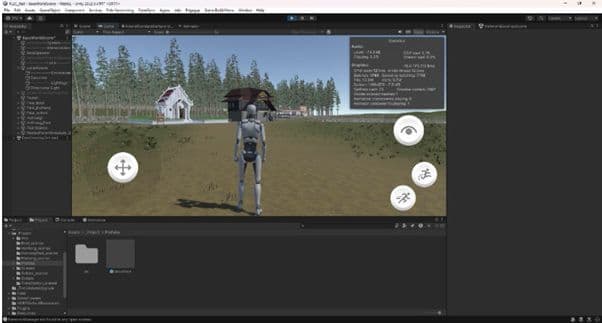
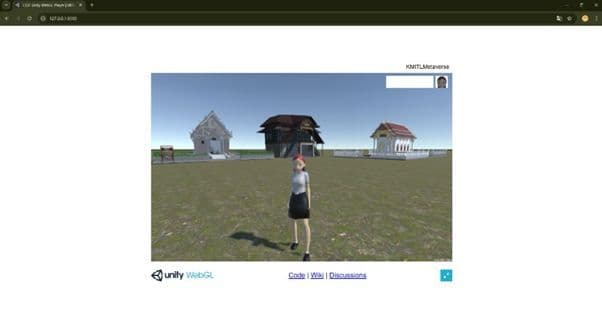
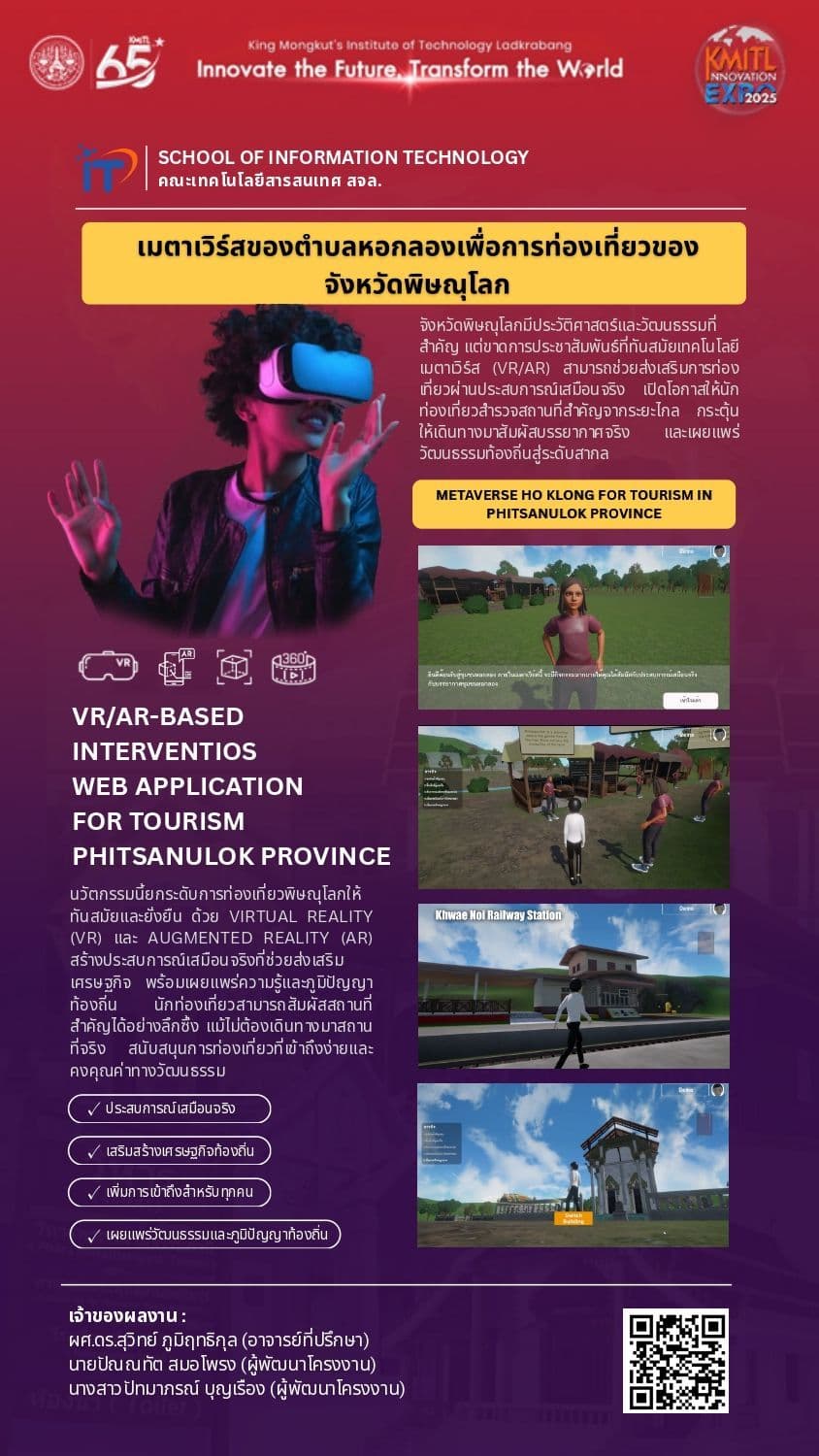
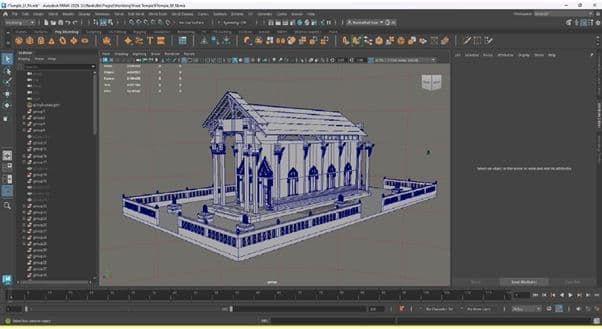
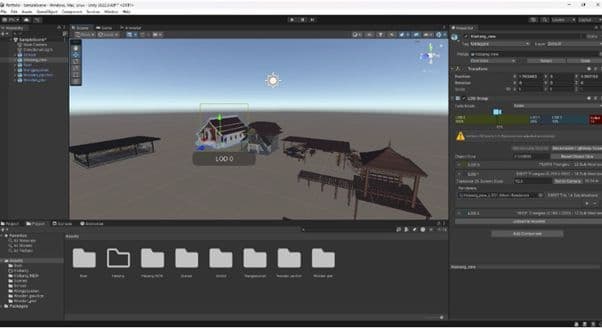
This research project aims to study and develop a metaverse system for tourism in Horklong Subdistrict, Phitsanulok Province. The primary goal is to create a prototype metaverse system that showcases the cultural and historical tourist attractions in Horklong Subdistrict through virtual reality technology. This will help promote tourism in rural areas that are not yet widely known and enhance the modern promotion of tourist attractions in the province. The development of the metaverse system in this project utilizes virtual reality technology to simulate the experience of touring Horklong Subdistrict via a virtual boat ride. Users will be able to access the system through the Unity platform, which is a tool used to develop 3D and VR applications. The system is designed to allow users to choose to ride a virtual boat and visit various places that have been creatively recreated in a virtual format. These locations are designed and developed using 3D models based on real data collected from the Horklong Subdistrict area. This project is therefore an initiative to sustainably promote cultural and historical tourism in Phitsanulok Province. It has the potential to increase income for local communities as well as to disseminate local knowledge and wisdom to a broader audience. The metaverse system for tourism in Horklong Subdistrict is thus an important project in modernizing the province’s tourism sector and attracting more visitors, both domestically and internationally.
Objective

ประเทศไทยมีสถานที่ท่องเที่ยวที่สวยงามและหลากหลาย ซึ่งเป็นที่รู้จักในระดับโลก เช่น เกาะพีพี ภูเก็ต เชียงใหม่ และกรุงเทพมหานคร อย่างไรก็ตาม ยังมีสถานที่ท่องเที่ยวที่น่าสนใจอื่น ๆ อีกมากมายที่ยังไม่ค่อยเป็นที่รู้จักหรือได้รับความสนใจจากนักท่องเที่ยวมากนัก ทั้ง ๆ ที่มีความงดงามและเอกลักษณ์เฉพาะตัว สถานที่ท่องเที่ยวเหล่านี้มักตั้งอยู่ในพื้นที่ชนบท หรืออยู่ในแหล่งที่ห่างไกลจากเส้นทางท่องเที่ยวหลัก ทำให้การเข้าถึงอาจไม่สะดวกสบายเท่าที่ควร แต่ในขณะเดียวกันก็มีข้อดีในการรักษาความเป็นธรรมชาติและวัฒนธรรมดั้งเดิมของท้องถิ่นได้อย่างดี จังหวัดพิษณุโลกมีประวัติศาสตร์และสถานที่ท่องเที่ยวทางวัฒนธรรมสำคัญมากมาย แต่ขาดการประชาสัมพันธ์ที่ทันสมัย ทำให้ดึงดูดนักท่องเที่ยวได้ยาก การใช้เทคโนโลยีเมตาเวิร์สที่นิยมในปัจจุบันสามารถช่วยส่งเสริมการท่องเที่ยวได้อย่างมีประสิทธิภาพโครงการสร้างเมตาเวิร์สของหอกลองเกิดขึ้นเพื่อพัฒนาการท่องเที่ยวของจังหวัดพิษณุโลกให้มีความน่าสนใจและยั่งยืน โดยนำเสนอแหล่งท่องเที่ยวในตำบลหอกลองผ่านโลกเสมือนจริง นักท่องเที่ยวสามารถเยี่ยมชมสถานที่สำคัญ เรียนรู้ประวัติศาสตร์และวัฒนธรรมท้องถิ่น และเข้าร่วมกิจกรรมและเทศกาลต่าง ๆ ในรูปแบบเสมือนจริง จึงเป็นที่มาของโครงการเมตาเวิร์สของตำบลหอกลองเพื่อการท่องเที่ยวของจังหวัดพิษณุโลกเพื่อเพื่อศึกษาและพัฒนาการสร้างระบบเมตาเวิร์สสำหรับการท่องเที่ยว สร้างต้นแบบระบบเมตาเวิร์สสำหรับการท่องเที่ยวตำบลหอกลอง และส่งเสริมการท่องเที่ยวเชิงวัฒนธรรมและประวัติศาสตร์ของจังหวัดพิษณุโลกและเพิ่มรายได้จากการท่องเที่ยวให้กับชุมชนท้องถิ่น

Other Innovations

Aggregated gallic acid-modified platinum nanoparticles as colorimetric sensor for tannic acid detection in beverages based on displacement phenomenon

คณะวิทยาศาสตร์

Aggregated gallic acid-modified platinum nanoparticles as colorimetric sensor for tannic acid detection in beverages based on displacement phenomenon

A new colorimetric assay for the rapid detection of tannic acid in beverage samples based on displacement phenomenon of aggregated gallic acid-modified platinum nanoparticles is developed for the first time. PtNPs were functionalized with gallic acid, promoting the formation of the green-hued aggregated nanoparticles. While colorimetry offers a rapid method for identifying tannic acid, challenges remain in sensitivity and accuracy of detection on the PtNPs colorimetric probe, particularly in the presence of anthocyanin interferences. To address this, we developed a sample preparation method to degrade anthocyanin in beverages. Tannic acid was easily displaced onto the gallic acid-coated PtNPs surfaces, causing dispersion and resulting in a visible color change from green to orange−brown. Under the optimal conditions, the colorimetric sensor exhibited a linear response in the range of 1−2,000 µmol L−1 (R2 = 0.9991). The limit of detection (LOD) and the limit of quantification (LOQ) were found at 0.02 and 0.09 µmol L−1, respectively. The proposed sensor expressed superior selectivity over other interfering substances and demonstrated excellent precision with a relative standard deviation (RSD) of 1.00%−3.36%. More importantly, recoveries ranging from 95.0−104.7% were obtained, indicating the capability of proposed colorimetric sensor to detect tannic acid rapidly and accurately in real beverage samples.

Read more
Directing for 3D Animation “The Red Mist”

คณะสถาปัตยกรรม ศิลปะและการออกแบบ

Directing for 3D Animation “The Red Mist”

The thesis artwork titled “The Red Mist” presents a narrative adapted from a short story of the same name by Assistant Professor Chatnarong Wisutkul in 2003. The story is set in a future world where people's greed and selfishness have led to a war, forcing them to rely on "breathing machines" to survive in the "red toxic mist." Phakin, a 15-year-old boy, embarks on a journey with a group of refugees. As they pass through abandoned cities, they encounter a boy without a breathing machine who has recently lost his father. Phakin decides to help him, despite objections from others. The boy tries to end his life by shutting off his breathing machine, and when Phakin intervenes to save him, he collapses from inhaling the toxic air. Witnessing Phakin's selfless act, the others are moved and join forces to save both of them. Phakin demonstrates that in difficult times, humans must cooperate and help each other rather than being divided and selfish.

Read more
THE DEVELOPMENT OF LEARNING ACHIEVEMENT THE USE OF THE INTEGRATED FARMING SYSTEM BOARD GAME FOR THIRD-YEAR VOCATIONAL CERTIFICATE STUDENTS AT RATCHABURI COLLEGE OF AGRICULTURE AND TECHNOLOGY

คณะครุศาสตร์อุตสาหกรรมและเทคโนโลยี

THE DEVELOPMENT OF LEARNING ACHIEVEMENT THE USE OF THE INTEGRATED FARMING SYSTEM BOARD GAME FOR THIRD-YEAR VOCATIONAL CERTIFICATE STUDENTS AT RATCHABURI COLLEGE OF AGRICULTURE AND TECHNOLOGY

This study aims to develop a board game for teaching Integrated Farming System and to examine the learning achievement of third-year vocational certificate students at Ratchaburi College of Agriculture and Technology who used the board game as a learning tool. The research instruments included a board game developed using the Educational Boardgame Design Canvas. The board game is a strategic planning game consisting of five game boards, and 166 cards categorized into four types: 30 event cards, 60 special action cards, 16 character cards, and 60 production cards. It also includes 180 resource tokens of six kinds: 60 water tokens, 60 soil tokens, 45 plant product tokens, 45 animal product tokens, 45 aquatic product tokens, and 45 currency tokens. Additional components include one die and five player aid sheets. The game emphasizes planning and decision-making in integrated farming to maximize production and achievement points under game conditions and simulated scenarios. Research tools also included pre-and post-tests and a satisfaction questionnaire. The results indicated that students’ average scores significantly increased at the .05 level after using the board game, with the average pre-test score at 6.54 and the post-test score rising to 17.71. Additionally, an analysis of student satisfaction with board game-based learning revealed a high level of satisfaction (mean score = 4.45). The highest-rated aspects were the teacher’s implementation of post-tests (mean score = 4.69) and the engaging and diverse teaching methods used (mean score = 4.66).

Read more