


KMITL Expo 2026 LogoKMITL 66th Anniversary Logo

Albumin Smart Test : Innovative device for screening of kidney disease by mobile phone

Albumin Smart Test : Innovative device for screening of kidney disease by mobile phone

Abstract

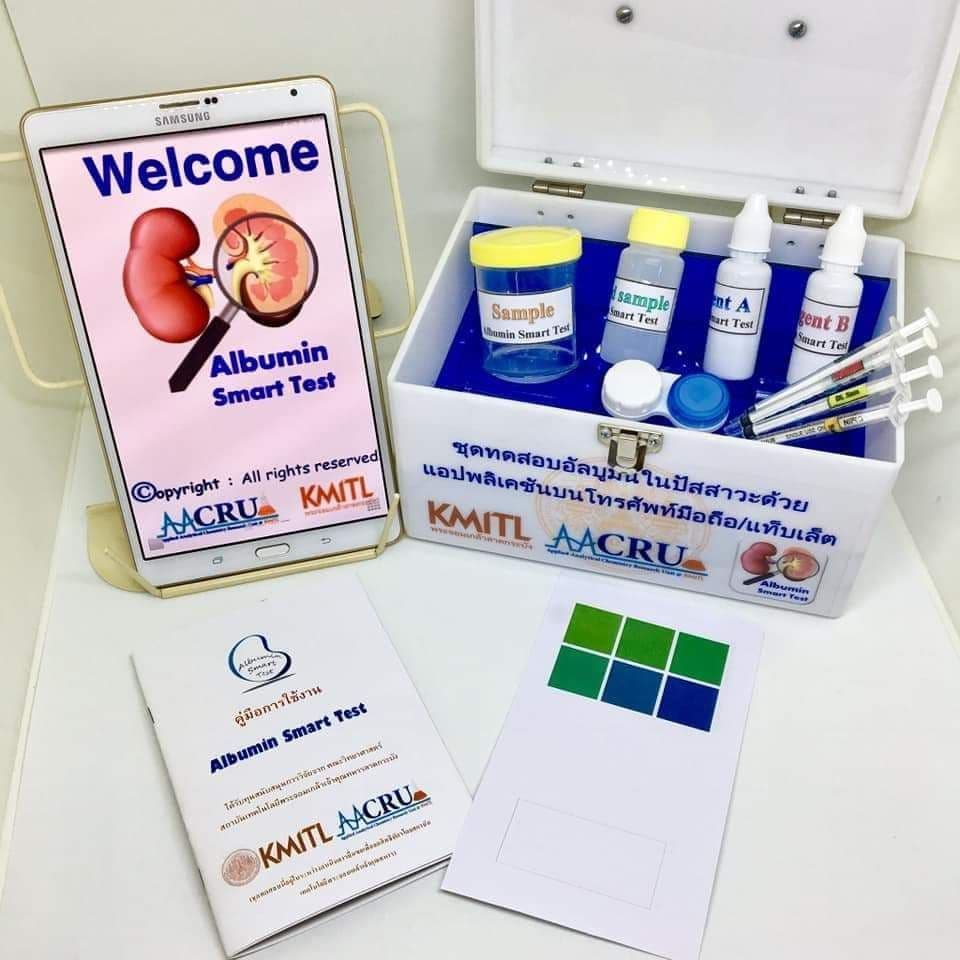
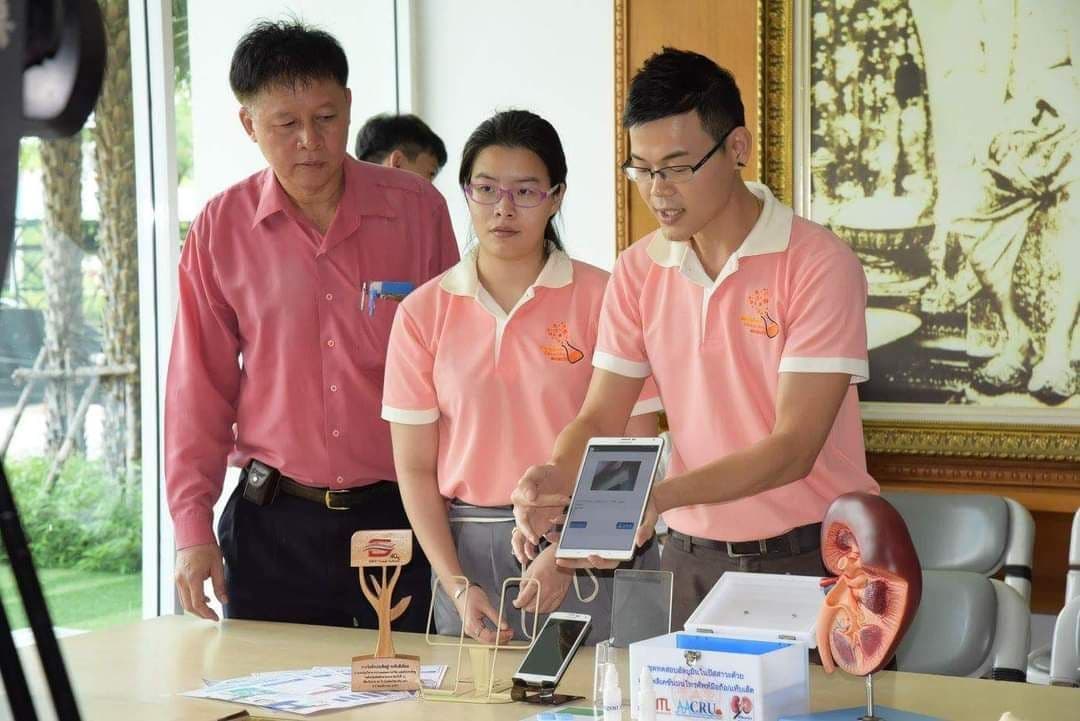
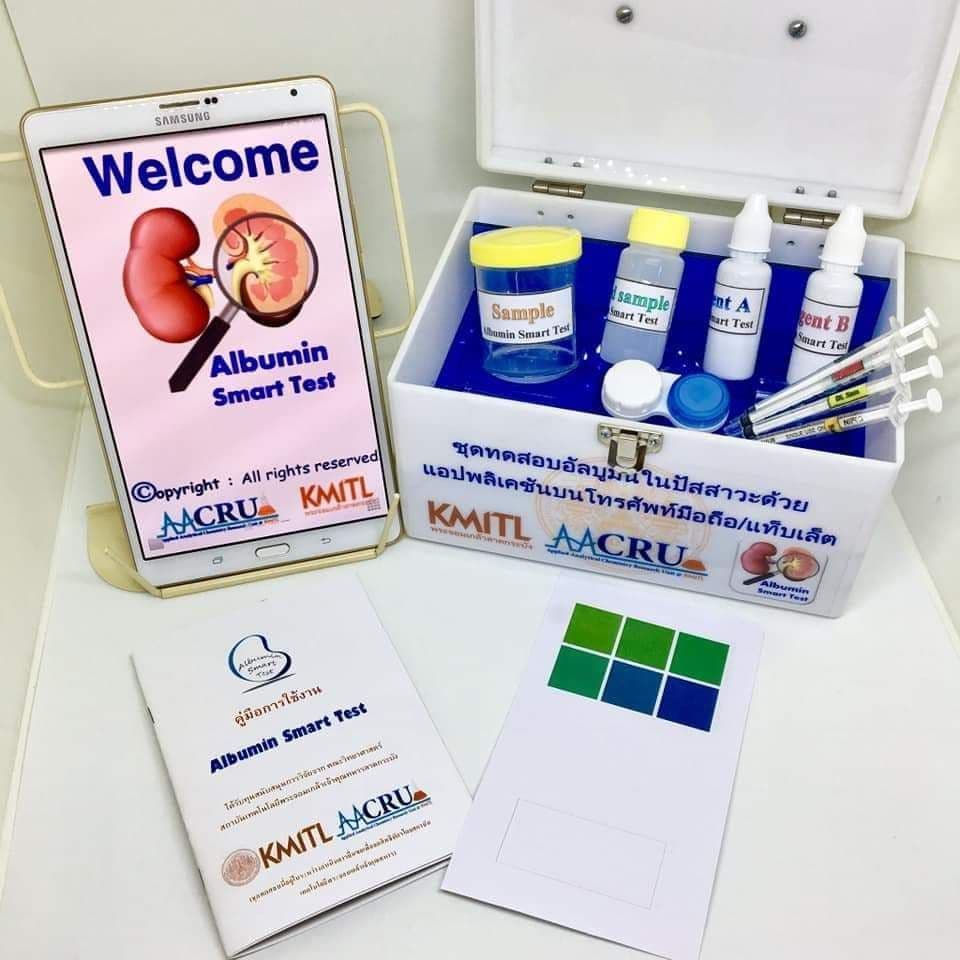
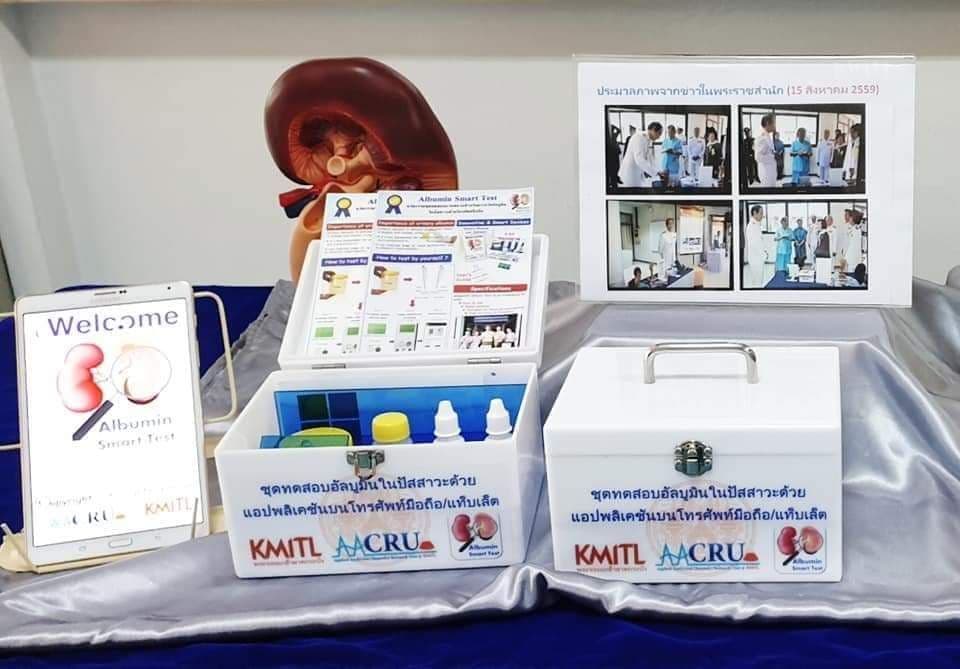
Albumin Smart Test is an innovative device for screening of kidney disease by mobile phone. The device composes of (1) container and testing device with specific reagents for the albumin detection. (2) The mobile phone, installed with "Albumin smart test" application. The test is started by dropping patient urine and the reagent. Color of the product is occurred and is captured by the application with subsequent evaluation of the albumin amount. The results is displayed on screen within 3 mins. This innovative device is simple, rapid and user-friendly.
Objective

อัลบูมิน (Albumin) คือโปรตีนชนิดหนึ่ง โดยทั่วไป จะไม่พบอัลบูมินในปัสสาวะ ยกเว้นในกรณีที่ไตทำงานผิดปกติ ซึ่งมักพบในผู้ป่วยที่ป่วยเป็นโรคเบาหวานเป็นระยะเวลานาน หรือที่เรียกว่า "โรคไตจากเบาหวาน" (Diabetic nephropathy) จะพบ อัลบูมินปนในปัสสาวะ ดังนั้น ปริมาณอัลบูมินในปัสสาวะ (Urinary albumin) จึงสามารถใช้เป็นดัชนีบ่งชี้การทำงานของไตในผู้ป่วยเบาหวานได้ โดยถ้าพบปริมาณอัลบูมินในปัสสาวะที่เก็บภายใน 24 ชั่วโมง น้อยกว่า 30 มิลลิกรัม จะถือว่าไตทำงานเป็นปกติ แต่ถ้าพบปริมาณอัลบูมินอยู่ในช่วงตั้งแต่ 30 ถึง 300 มิลลิกรัม จะจัดว่าไตทำงานผิดปกติในระยะแรก เรียกว่า "ภาวะไมโครอัลบูมินูเรีย" (Microalbuminuria) ซึ่งหากผู้ป่วยเข้ารับการรักษาตั้งแต่ระยะนี้ จะลดโอกาสเสี่ยงต่อภาวะไตวายเรื้อรังได้อย่างมาก วิธีการตรวจวัดระดับอัลบูมินในปัสสาวะในปัจจุบัน ทำโดยเก็บตัวอย่างปัสสาวะของผู้ป่วย ส่งไปที่ห้องปฏิบัติการของโรงพยาบาล ถึงแม้จะให้ผลถูกต้องแม่นยำ หากแต่มีขั้นตอนในการวิเคราะห์หลายขั้นตอน ใช้เวลานานกว่าจะรู้ผล อีกทั้งเครื่องมือมีขนาดใหญ่และมีความซับซ้อน ต้องใช้ผู้เชี่ยวชาญทำการทดสอบ ผู้ป่วยไม่สามารถวัดระดับอัลบูมินได้เอง ดังนั้นจึงจำเป็นต้องมีอุปกรณ์ตรวจคัดกรองปริมาณอัลบูมินที่ใช้ทดสอบนอกห้องปฏิบัติการได้ โดยควรเป็นอุปกรณ์ขนาดเล็ก พกพาสะดวก ใช้งานง่าย เหมาะสำหรับการวินิจฉัยนอกห้องปฏิบัติการ หรือ ‘Point-of-care testing’ ในปัจจุบัน ชุดตรวจวัดอัลบูมินในปัสสาวะแบบภาคสนามที่มีจำหน่าย จะทำการทดสอบโดยจุ่มแถบตรวจวัดที่เคลือบด้วยน้ำยาซึ่งจะทำปฏิกิริยากับอัลบูมินในปัสสาวะ แล้วเกิดการเปลี่ยนแปลงที่แถบสี โดยระดับความเข้มสีจะแปรผันกับปริมาณของอัลบูมินที่ต้องการตรวจวัด ถึงแม้จะใช้งานง่าย แต่มีข้อจำจัดคืออาจมีความคลาดเคลื่อน เนื่องจากเป็นการตรวจวัดด้วยสายตา การแปลผลอาจจะไม่ละเอียดพอ ไม่ใกล้เคียงกับความเป็นจริง อีกทั้งสีของปัสสาวะอาจรบกวนการทดสอบได้ เพื่อเป็นการพัฒนาวิธีทดสอบให้มีประสิทธิภาพ มีความถูกต้องแม่นยำมากขึ้น จึงได้ประดิษฐ์ Albumin Smart Test สำหรับตรวจคัดกรองอัลบูมินในปัสสาวะโดยใช้โทรศัพท์มือถือขึ้น โดยออกแบบให้ใช้งานง่าย รู้ผลเร็ว พกพาไปใช้ ณ ที่ใดก็ได้ และสามารถหักล้างการรบกวนจากสีของตัวอย่างปัสสาวะได้

Other Innovations

Development of Mango Powder using the Foam-mat Method with Hydroxypropyl Methyl cellulose is a foaming agent

คณะอุตสาหกรรมอาหาร

Development of Mango Powder using the Foam-mat Method with Hydroxypropyl Methyl cellulose is a foaming agent

This research focuses on the development of mango powder using the foam-mat drying method, which is an effective technique for preserving the quality of fruit and vegetable products. Hydroxypropyl Methylcellulose (HPMC) was used as a foaming agent. The study evaluated the effects of HPMC on the chemical and physical properties, antioxidant activity, and shelf life of mango powder. The findings indicated that HPMC plays a crucial role in improving the foam stability before drying and enhancing the quality of the dried powder. This research provides a valuable approach to adding value to substandard mango yields and reducing agricultural waste. It also contributes to the development of high-nutritional processed food products with extended shelf life.

Read more
AI-Powered Security & Consumer Analytics, Integrating AI Vision for Enhanced Security and Consumer Behavior Insights in the Digital Era

คณะบริหารธุรกิจ

AI-Powered Security & Consumer Analytics, Integrating AI Vision for Enhanced Security and Consumer Behavior Insights in the Digital Era

In the digital era, Artificial Intelligence (AI) plays a crucial role in developing smart cities and enhancing business operations. Among AI-driven technologies, AI Vision Analytics has gained significant attention for Access Control Systems (ACS) and Consumer Behavior Analytics. This research focuses on integrating AI Access Control and AI Video Analytics to examine factors influencing Technology Adoption Behavior using the UTAUT2 (Unified Theory of Acceptance and Use of Technology 2) framework. Key factors assessed include Trust in Technology, Effort Expectancy, Social Influence, and Performance Expectancy, which impact users’ willingness to adopt AI-driven security and analytics solutions. The study also includes a real-world implementation of AI Vision Analytics at KMITL EXPO, where an AI-powered Access Control System and AI Video Analytics are deployed. The collected data is analyzed to identify trends in AI adoption for business management and security enhancement. The findings provide valuable insights for businesses and organizations to optimize AI Vision Analytics for enhancing security management and digital marketing strategies.

Read more
Development of Carbon Nanofiber Composite Materials for Supercapacitors in Energy Storage

วิทยาลัยการจัดการนวัตกรรมและอุตสาหกรรม

Development of Carbon Nanofiber Composite Materials for Supercapacitors in Energy Storage

This study presents the development of carbon-based multiphase metal oxide nanocomposites (CNF@MOx; M = Ag, Mn, Bi, Fe) incorporating silver, manganese, bismuth, and iron nanoparticles within polyacrylonitrile (PAN)-derived carbon nanofibers. These nanocomposites were fabricated via the electrospinning technique followed by annealing in an argon atmosphere. The resulting nanofibers exhibited a uniform structure, with diameters ranging from 559 to 830 nm and embedded nanoparticles of 9-21 nm. Structural characterization confirmed the presence of various oxidation states of metal oxides, which play a crucial role in charge storage mechanisms. Electrochemical performance testing demonstrated that CNF@Ag/Mn/Bi/Fe-20 achieved the highest specific capacitance of 156 F g⁻¹ at a scan rate of 2 mV s⁻¹ and exhibited excellent cycling stability, retaining over 96% of its capacitance after 1400 charge-discharge cycles. The synergistic combination of electric double-layer capacitance and redox-based charge storage enhances the performance of these nanofibers as promising electrode materials for supercapacitor applications.

Read more