



Innovation Owner
อ.ดร. Chitchai Kuandachakupt
Advisor
Details
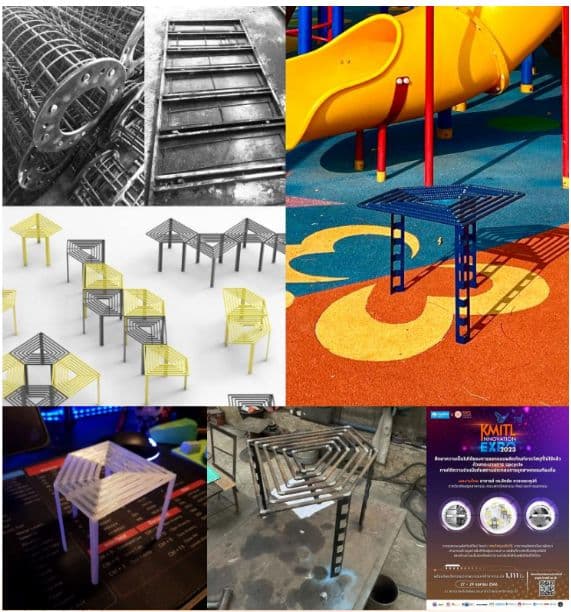
This study investigates the feasibility of designing products from industrial waste materials at a micro-pile establishment through the Upcycle process, guided by creative innovation principles and the 3Rs framework.
This study investigates the feasibility of designing products from industrial waste materials at a micro-pile establishment through the Upcycle process, guided by creative innovation principles and the 3Rs framework. The research examines the types and potential of discarded materials for developing distinctive decorative and household product prototypes, achieved through collaboration among academic institutions, the industrial establishment, craftsmen, and the local community. The resulting prototypes demonstrate viable commercial potential while serving as a practical knowledge base for entrepreneurs, designers, and start-ups seeking to develop new products from waste materials in a creative and sustainable manner.
Objective
The objectives include studying the potential of waste materials for creative Upcycling to enhance economic value, reduce environmental impact, and provide design knowledge for stakeholders.
- To study the types and potential of discarded materials for creative product development (Upcycling), creating creative innovation concepts to achieve economic value and reduce environmental problems caused by waste for establishments through design and reuse.
- To present knowledge on design and value-added product development by experimenting and designing based on the types and potential of unused materials for creative product development (Upcycling).
- To benefit project stakeholders, including industrial owners, participating communities, and product users, serving as a model for further studies on creative product development (Upcycling).
INNOVATION VOTING
RANK #—
—