



Innovation Owner
Miss NATLADA SOMANAWAT
Student
Details
This study investigates thermal stress on cast iron brake shoes using the finite element method to compare results with actual components and redesign the brake shoe to reduce thermal stress.
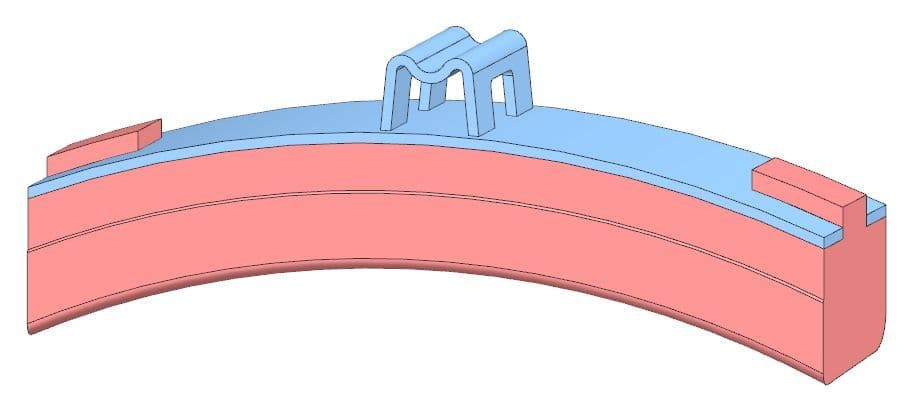
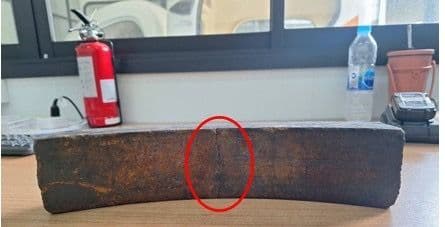
The railway brake system usually uses compressed air brake system which uses high-pressure air to press the brake shoe on the surface of the wheel to reduce the speed of the train. Repeated friction generates heat at the contact surface, increasing thermal stress on the cast iron brake shoe. The purpose of this study is to investigate the thermal stress on a prototype of cast iron brake shoe using the finite element method compare the analytical results to the actual brake shoe and redesign a brake shoe prototype to reduce thermal stress. Based on the results of the thermal stress study using the finite element method, it has shown that the location of the thermal stress on the prototype brake shoe according to the location of the crack on the real brake shoe. The brake shoe's design which includes single notch in the center of brake shoe which is can help to reduce thermal stress. The results from this study should be validated with the results from the field test to evaluate both of thermal distribution and braking efficiency in term of braking distances as well.
Objective
Analyze thermal stress on high-phosphorus cast iron brake shoe models using the finite element method and design a new brake shoe to reduce thermal stress.
- Analyze the thermal stress on a high-phosphorus cast iron brake shoe model to compare finite element analysis results with actual brake shoe components.
- Design a new high-phosphorus cast iron brake shoe to reduce the thermal stress occurring on the brake shoe.