



Innovation Owner
นาย Amon Boontore
Advisor
Details
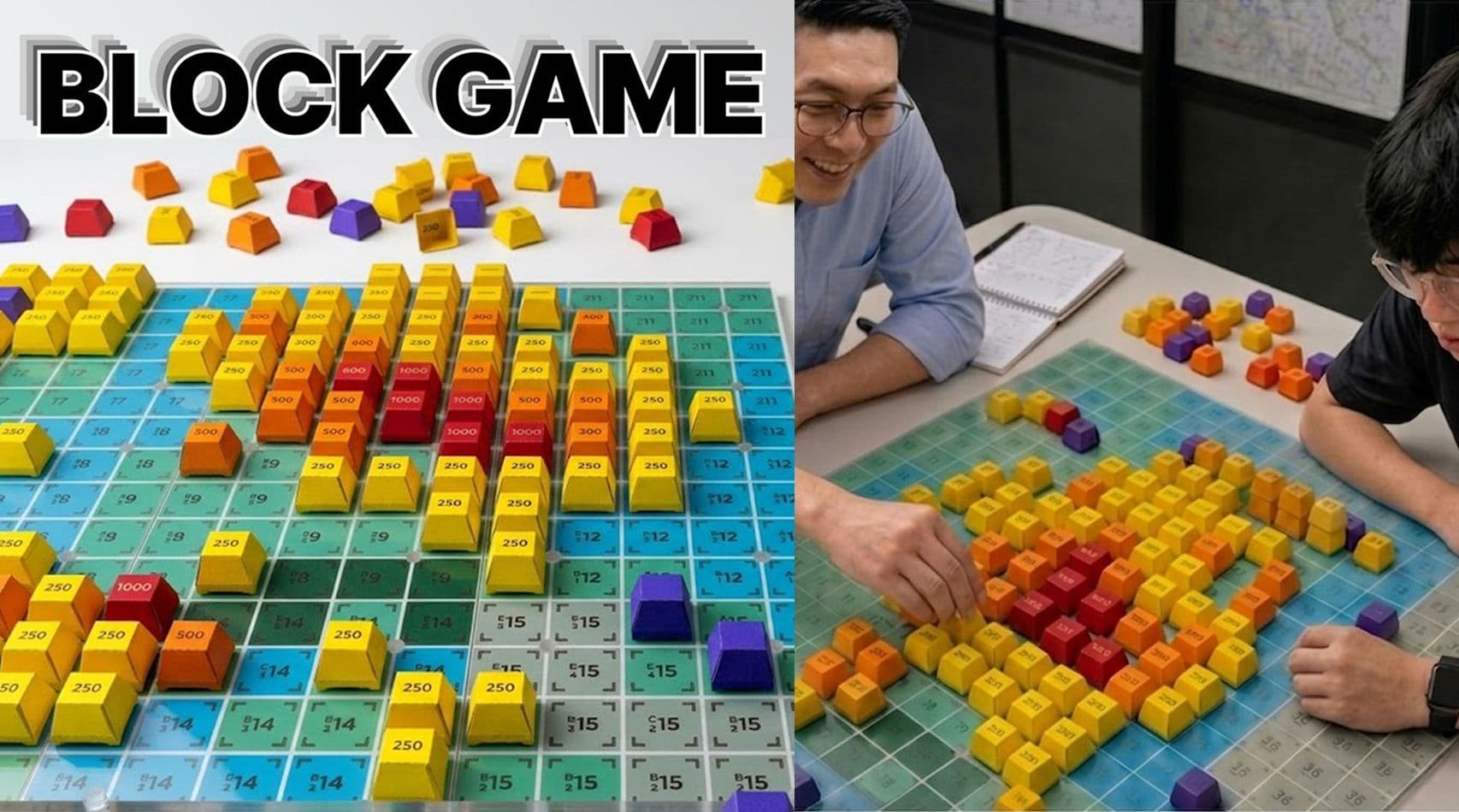
Block Game: Learning of Spatial Urban Resource Management is an interactive tool that transforms complex urban planning theories into tangible hands-on experiences. It allows players to act as urban planners, experimenting with spatial layouts and resource allocation.
Rapid global urbanization has led to a continuous rise in urban populations, posing critical challenges to spatial and resource allocation in modern cities. This project aims to synthesize core urban planning issues into balanced scenarios and develop a prototype titled "Block Game: Learning of Spatial Urban Resource Management." Serving as an interactive learning tool, the game transforms complex theoretical concepts into tangible hands-on experiences.
Designed for both urban planning students and the general public, the game allows players to step into the shoes of urban planners—experimenting with:
- Spatial layouts
- Balancing population capacity with available land
- Reserving space for future development
Through experiential learning, collaborative decision-making, active listening, and iterative design reflection, this prototype simplifies intricate academic principles into an engaging format. Ultimately, it fosters foundational spatial reasoning and participatory skills necessary for addressing future urban complexities, such as disaster risk management and climate change adaptation.
Objective
The project aims to develop balanced urban planning scenarios and a prototype block game to foster collaborative learning, critical decision-making, and iterative design skills for students and the public.
- To select key issues and create urban planning scenarios that balance simplicity and complexity, serving as effective representations for learning spatial urban resource management.
- To produce a prototype of the "Block Game: Learning of Spatial Urban Resource Management," promoting participatory work, active listening, verification, and iterative design for the general public and students of urban planning.
INNOVATION VOTING
RANK #—
—